Super Clean Room Technology

In the electronic industry where the technological innovation is remarkable, the clean environment under very severe conditions is highly required. As the level of semiconductor integration gets higher, in the production line, it is required to control the number of particles sized 0.01 ㎛ and the chemical gas in ppb order.

In addition to those ultra clean environments, we, Techno Ryowa has developed a super clean system that can fully meet our clients’ needs such as reducing the cost of building facilities or the cost of operation. This system uses FFU (Fan Filter Unit) system with a temperature control function, which enables highly accurate temperature and humidity control that deals with local loads with minimum primary air.
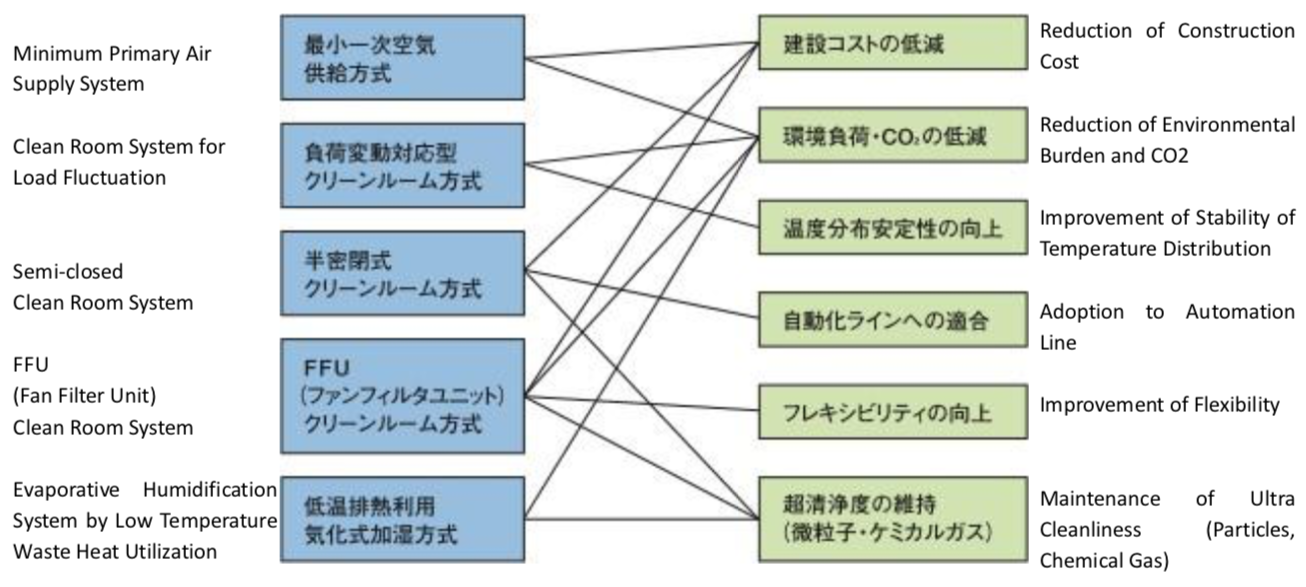
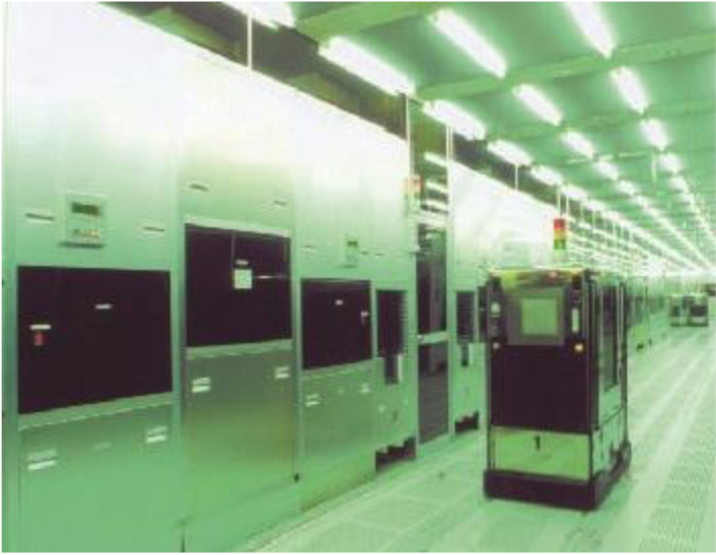
Techno Ryowa’s Super Clean Room Concept

Techno Ryowa’s Super Clean Room Concept

SHARP CORPORATION

SHARP CORPORATION

  • SHARP CORPORATION
  • Mitsubishi Material Silicon
  • LSI Logic Japan Semiconductor
  • Futaba Corporation
  • Yamaha Kagoshima Semiconductor Inc.
  • Kawasaki Steel LSI Factory
  • Yamaha Corporation
  • TOKYO KEIKI INC.
  • Texas Instruments Japan Limited
  • TOKYO OHKA KOGYO Co., Ltd.
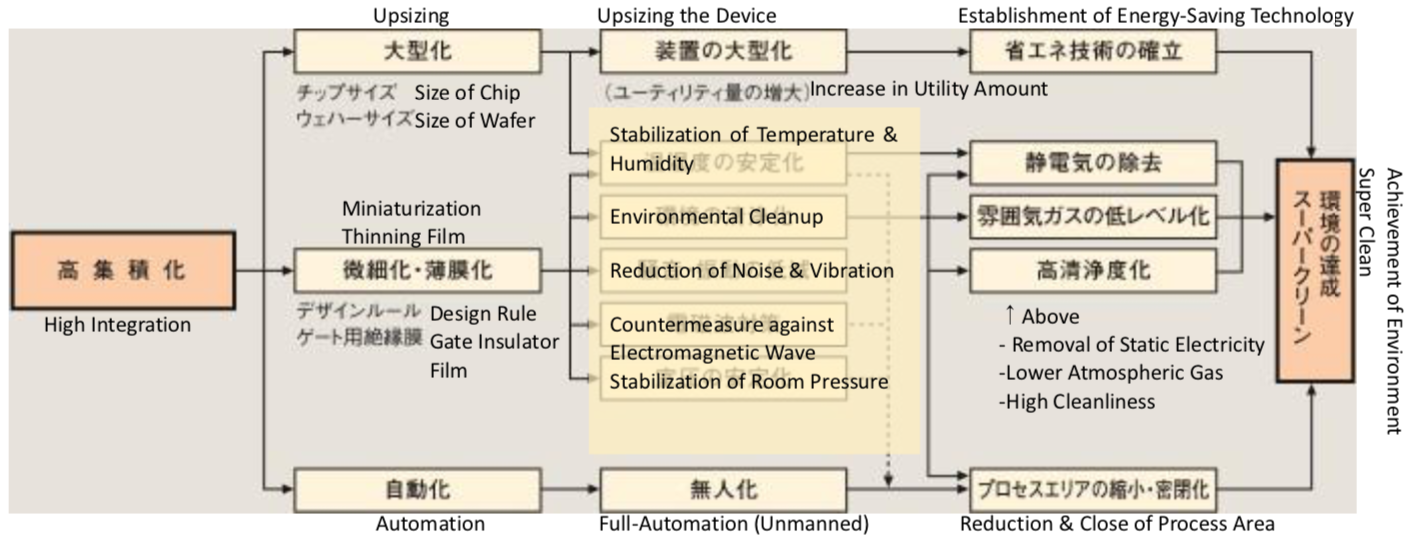
How to Deal with High Integration

How to Deal with High Integration

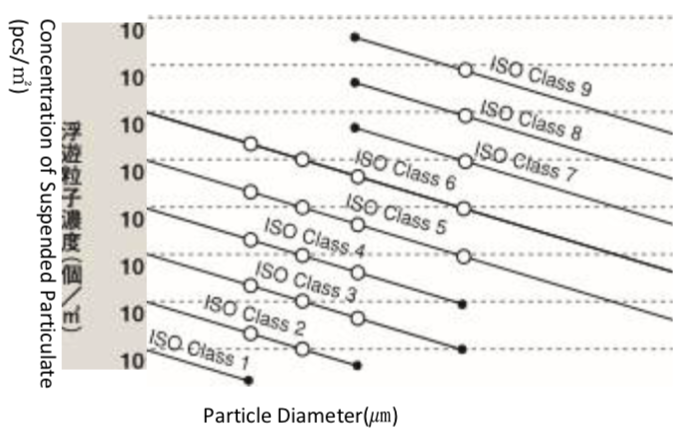
Graph of Cleanliness Class (ISO, JIS)

Graph of Cleanliness Class (ISO, JIS)

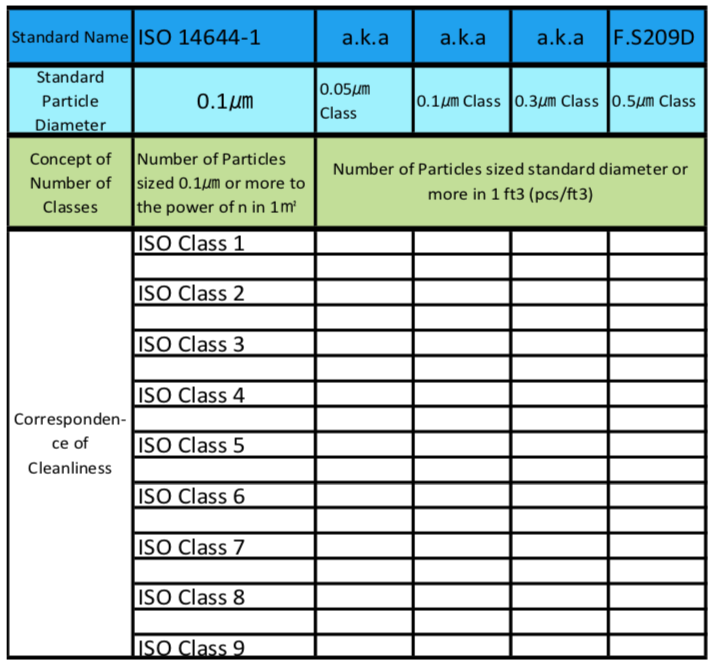
Table of Various Notations Regarding Cleanliness Class

Table of Various Notations Regarding Cleanliness Class

  • ISO 14644-1(1999) “Cleanrooms and associated controlled environments”: The international standard regarding cleanrooms. Other standards shall be amended or abolished in accordance with this standard. Techno Ryowa participated in preparing the draft. As notations of cleanliness class, the common logarithm of C (the number of particles sized greater than 0.1 ㎛ in 1 ㎥) is expressed as Class N.
  • JISB 9920: Same as ISO notations. Its detail has become as same as those of ISO since the revision in 2002.
  • Federal Standard 209D: Federal standard in USA. 209D is often applied. Class will be indicated by the number of particles sized 0.5 ㎛ or more in 1 ft3.
  • Notations of Common Name (a.k.a): Not official names, however, names such as “0.1 ㎛ Class 100“ is often applied from F.S.209D.